


• Love
    1
    0 Commentarios 0 Acciones 569 Views 0 Vista previa
  • 0 Commentarios 0 Acciones 580 Views 0 Vista previa
  • Title: Stop Motion Animation – Creating Motion from Stillness


    Stop motion is one of the oldest and most magical forms of animation. It’s not about speed – it’s about rhythm, planning, and breathing life into the inanimate. Whether you animate clay figures, paper cutouts, or even kitchen utensils, this hobby is both playful and powerful.

    Here’s how to get started:

    1. Understand what stop motion is.
    It’s a series of photos where each frame shows a tiny movement. Played back at 12–24 frames per second, it creates the illusion of life.

    2. Pick your medium.
    Popular choices include:

    Clay (claymation)

    Paper (cutout animation)

    Lego or figures (brickfilms)

    Everyday objects (pixilation or object animation)

    Each has its own charm. Try what you already have at home!

    3. Keep it steady.
    Use a tripod or solid surface. Shaky shots ruin the illusion. Tape your setup down if needed. For phone cameras, try simple tripods or holders.

    4. Use a stop motion app or software.
    For mobile: Stop Motion Studio is great.
    On desktop: Dragonframe (pro), or free options like MonkeyJam or Kdenlive for frame editing.

    5. Light is everything.
    Use constant light sources. Avoid windows or sunlight – shadows change quickly. Desk lamps or LED panels work best.

    6. Plan your movement.
    Sketch a basic storyboard. Think in “key poses” first, then fill in transitions. More frames = smoother motion, but also more effort.

    7. Add sound & effects later.
    Record audio separately or use royalty-free sounds. Add effects (dust, shake, filters) in post-editing to enhance the mood.

    🎯 Pro Tip: Even a bouncing ball is a great starting exercise. Share your short clips and behind-the-scenes shots on net-twin.de – people love seeing the magic before it’s polished!

    📌 #StopMotion #FrameByFrame #DIYAnimation #CreativeProcess #AnimationMagic #nettwin


    Kind regards, Andy 🤩

    -----------------------------------
    Advertising that's really worth it for you!

    💰 Get it now: Get a €100 voucher from Temu (new customers only)!

    Step 1 - Use my voucher link: https://temu.to/m/uwsjqkbzhhl
    Step 2 - Enter the following code in the search field at Temu to secure your €100!
    The Code: tar37925
    Title: Stop Motion Animation – Creating Motion from Stillness Stop motion is one of the oldest and most magical forms of animation. It’s not about speed – it’s about rhythm, planning, and breathing life into the inanimate. Whether you animate clay figures, paper cutouts, or even kitchen utensils, this hobby is both playful and powerful. Here’s how to get started: 1. Understand what stop motion is. It’s a series of photos where each frame shows a tiny movement. Played back at 12–24 frames per second, it creates the illusion of life. 2. Pick your medium. Popular choices include: Clay (claymation) Paper (cutout animation) Lego or figures (brickfilms) Everyday objects (pixilation or object animation) Each has its own charm. Try what you already have at home! 3. Keep it steady. Use a tripod or solid surface. Shaky shots ruin the illusion. Tape your setup down if needed. For phone cameras, try simple tripods or holders. 4. Use a stop motion app or software. For mobile: Stop Motion Studio is great. On desktop: Dragonframe (pro), or free options like MonkeyJam or Kdenlive for frame editing. 5. Light is everything. Use constant light sources. Avoid windows or sunlight – shadows change quickly. Desk lamps or LED panels work best. 6. Plan your movement. Sketch a basic storyboard. Think in “key poses” first, then fill in transitions. More frames = smoother motion, but also more effort. 7. Add sound & effects later. Record audio separately or use royalty-free sounds. Add effects (dust, shake, filters) in post-editing to enhance the mood. 🎯 Pro Tip: Even a bouncing ball is a great starting exercise. Share your short clips and behind-the-scenes shots on net-twin.de – people love seeing the magic before it’s polished! 📌 #StopMotion #FrameByFrame #DIYAnimation #CreativeProcess #AnimationMagic #nettwin Kind regards, Andy 🤩 ----------------------------------- Advertising that's really worth it for you! 💰 Get it now: Get a €100 voucher from Temu (new customers only)! Step 1 - Use my voucher link: https://temu.to/m/uwsjqkbzhhl Step 2 - Enter the following code in the search field at Temu to secure your €100! The Code: tar37925

    Wow
    2
    0 Commentarios 0 Acciones 12K Views 0 Vista previa
  • Title: Calligraphy & Hand Lettering – Drawing Letters with Personality


    Calligraphy isn’t just writing – it’s the art of giving letters rhythm, weight, and soul. Whether you're aiming for classic copperplate scripts or playful modern lettering, this hobby combines fine motor skills with expressive design.


    Let’s dive into how you can get started with calligraphy and hand lettering:


    1. Know the difference.

    Calligraphy is about writing – you use tools like nib pens or brushes to form letters in real time, with variation in pressure and stroke.

    Hand lettering is about drawing letters – each shape is crafted like an illustration.

    Both are deeply artistic and often overlap in style and technique.


    2. Start with basic tools.
    For beginners:

    Calligraphy: a dip pen + nib + ink (or brush pens for ease)

    Hand lettering: pencils, fineliners, and brush pens (Tombow, Fudenosuke, etc.)

    Smooth paper that won’t bleed or feather

    Digital tools like the Apple Pencil + Procreate are also great alternatives.


    3. Learn the strokes, not just the alphabet.
    Practice basic strokes: upstrokes (light), downstrokes (heavy), loops, ovals. Master these before you form letters – they’re the building blocks of every script.


    4. Focus on spacing and balance.
    Beautiful lettering is more about consistency than perfection. Watch for even spacing, similar angles, and good rhythm between letters.


    5. Use guidelines.
    Draw pencil guides for baseline, x-height, ascenders, and descenders. It’s not cheating – it’s essential.


    6. Don’t rush.
    Speed kills style. Take your time. Breath, write slowly, and enjoy the flow. Good calligraphy feels meditative.


    7. Explore different styles.
    Try gothic blackletter, italic, Roman capitals, modern script… or create your own. Mixing styles can add personality to your projects.


    🎯 Pro Tip: Post your progress and practice sheets on net-twin.de
    – our creative community loves beautiful lines, mindful craft, and expressive inkwork.

    📌 #Calligraphy #HandLettering #ModernScript #CreativeWriting #InkArt #nettwin


    Kind regards, Andy 🤩

    -----------------------------------
    Advertising that's really worth it for you!

    Get it now: Get a €100 voucher from Temu (new customers only)!

    Step 1 - Use my voucher link: https://temu.to/m/uwsjqkbzhhl
    Step 2 - Enter the following code in the search field at Temu to secure your €100!
    The Code: tar37925

    Title: Calligraphy & Hand Lettering – Drawing Letters with Personality Calligraphy isn’t just writing – it’s the art of giving letters rhythm, weight, and soul. Whether you're aiming for classic copperplate scripts or playful modern lettering, this hobby combines fine motor skills with expressive design. Let’s dive into how you can get started with calligraphy and hand lettering: 1. Know the difference. Calligraphy is about writing – you use tools like nib pens or brushes to form letters in real time, with variation in pressure and stroke. Hand lettering is about drawing letters – each shape is crafted like an illustration. Both are deeply artistic and often overlap in style and technique. 2. Start with basic tools. For beginners: Calligraphy: a dip pen + nib + ink (or brush pens for ease) Hand lettering: pencils, fineliners, and brush pens (Tombow, Fudenosuke, etc.) Smooth paper that won’t bleed or feather Digital tools like the Apple Pencil + Procreate are also great alternatives. 3. Learn the strokes, not just the alphabet. Practice basic strokes: upstrokes (light), downstrokes (heavy), loops, ovals. Master these before you form letters – they’re the building blocks of every script. 4. Focus on spacing and balance. Beautiful lettering is more about consistency than perfection. Watch for even spacing, similar angles, and good rhythm between letters. 5. Use guidelines. Draw pencil guides for baseline, x-height, ascenders, and descenders. It’s not cheating – it’s essential. 6. Don’t rush. Speed kills style. Take your time. Breath, write slowly, and enjoy the flow. Good calligraphy feels meditative. 7. Explore different styles. Try gothic blackletter, italic, Roman capitals, modern script… or create your own. Mixing styles can add personality to your projects. 🎯 Pro Tip: Post your progress and practice sheets on net-twin.de – our creative community loves beautiful lines, mindful craft, and expressive inkwork. 📌 #Calligraphy #HandLettering #ModernScript #CreativeWriting #InkArt #nettwin Kind regards, Andy 🤩 ----------------------------------- Advertising that's really worth it for you! Get it now: Get a €100 voucher from Temu (new customers only)! Step 1 - Use my voucher link: https://temu.to/m/uwsjqkbzhhl Step 2 - Enter the following code in the search field at Temu to secure your €100! The Code: tar37925

    Wow
    Like
    3
    0 Commentarios 0 Acciones 13K Views 0 Vista previa
  • 0 Commentarios 0 Acciones 485 Views 0 Vista previa
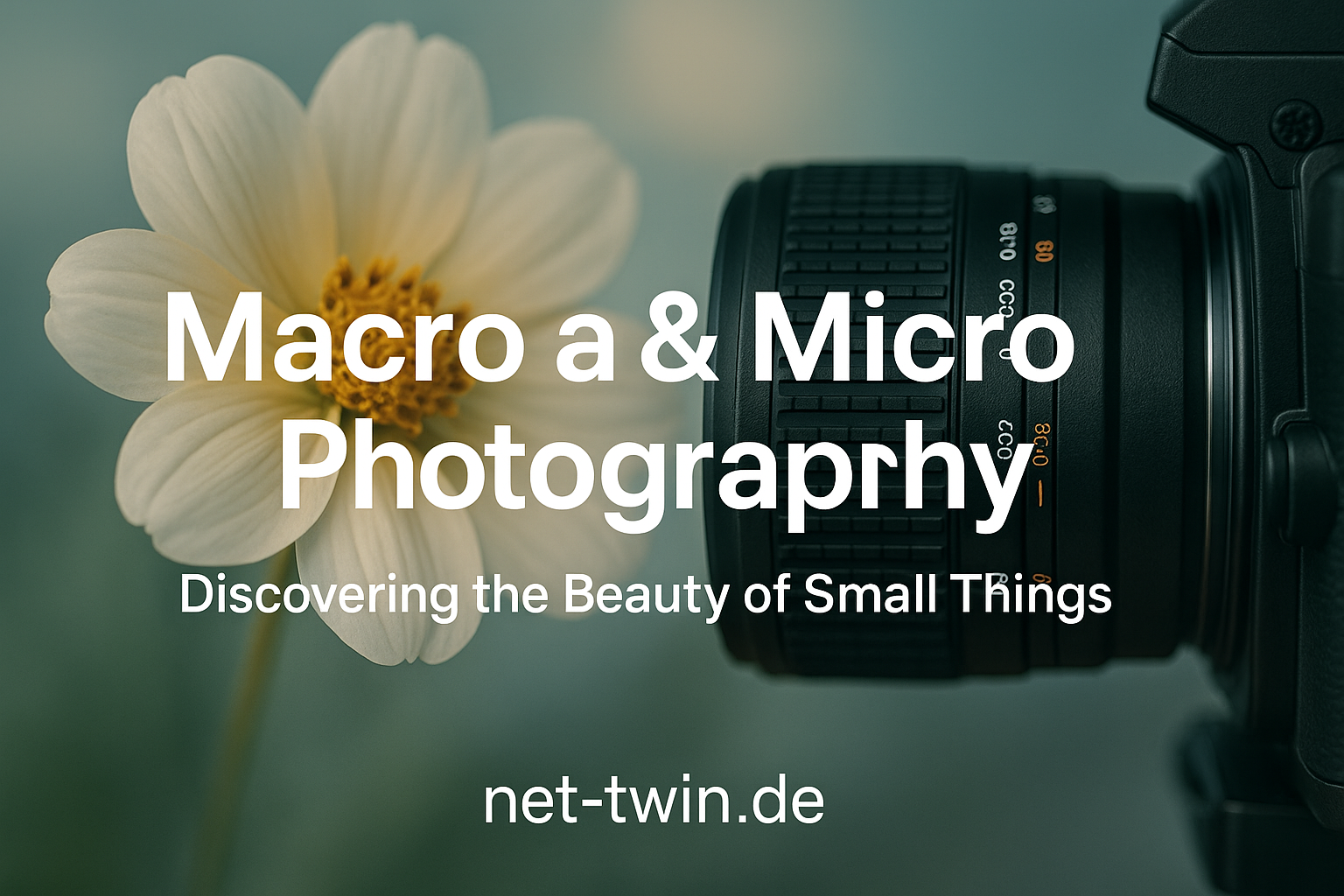
  • Title: Macro & Micro Photography – Discovering the Beauty of Small Things

    There’s an entire universe just below the threshold of the naked eye – textures, patterns, creatures, and structures most people overlook. Macro and micro photography bring this world into focus, one detail at a time.


    Here’s how you can start exploring it with your lens:


    1. Know the difference.

    Macro photography deals with small subjects at close range – like insects, textures, or plants – usually at a 1:1 magnification or higher.

    Micro photography (or photomicrography) involves microscopes to photograph what’s otherwise invisible – like crystals, cells, or microfibers.


    2. Start with what you have.
    Many smartphones today offer decent macro modes. Clip-on macro lenses are inexpensive and can produce surprising results. For DSLRs or mirrorless cameras, a dedicated macro lens (like a 100mm f/2.8) is ideal.


    3. Stabilization is key.
    At this scale, even the tiniest movement ruins the shot. Use a tripod, remote shutter, and delay timer. For extreme close-ups, consider a focusing rail for precision.


    4. Light your subject well.
    Natural light can work, but artificial light gives you control. Use LED rings, soft diffused light, or even a flashlight with a diffuser. Avoid harsh shadows and reflections.


    5. Mind your depth of field.
    At macro scale, depth of field is razor thin. Shoot at f/8–f/16, and use focus stacking (multiple shots with different focus points) to get your entire subject sharp.


    6. Subject ideas to start with:

    Textures: leaves, fabrics, wood grain

    Water droplets

    Bugs and insects (if they stay still!)

    Everyday objects like salt, match heads, coins

    Crystals, sand, spices, feathers


    7. Edit with care.
    Sharpening, contrast, and color adjustments can enhance details – but don’t overdo it. Highlight the natural beauty of the micro world.


    🎯 Pro Tip: Upload your discoveries to net-twin.de
    – whether it’s a bug’s eye or a dew-covered thread, your lens reveals what others miss.


    📌 #MacroPhotography #MicroWorlds #CloseUpMagic #CreativeVision #TinyDetails #nettwin


    Kind regards, Andy 🤩


    -----------------------------------
    Advertising that's really worth it for you!

    Get it now: Get a €100 voucher from Temu (new customers only)!

    Step 1 - Use my voucher link: https://temu.to/m/uwsjqkbzhhl
    Step 2 - Enter the following code in the search field at Temu to secure your €100!
    The Code: tar37925

    Title: Macro & Micro Photography – Discovering the Beauty of Small Things There’s an entire universe just below the threshold of the naked eye – textures, patterns, creatures, and structures most people overlook. Macro and micro photography bring this world into focus, one detail at a time. Here’s how you can start exploring it with your lens: 1. Know the difference. Macro photography deals with small subjects at close range – like insects, textures, or plants – usually at a 1:1 magnification or higher. Micro photography (or photomicrography) involves microscopes to photograph what’s otherwise invisible – like crystals, cells, or microfibers. 2. Start with what you have. Many smartphones today offer decent macro modes. Clip-on macro lenses are inexpensive and can produce surprising results. For DSLRs or mirrorless cameras, a dedicated macro lens (like a 100mm f/2.8) is ideal. 3. Stabilization is key. At this scale, even the tiniest movement ruins the shot. Use a tripod, remote shutter, and delay timer. For extreme close-ups, consider a focusing rail for precision. 4. Light your subject well. Natural light can work, but artificial light gives you control. Use LED rings, soft diffused light, or even a flashlight with a diffuser. Avoid harsh shadows and reflections. 5. Mind your depth of field. At macro scale, depth of field is razor thin. Shoot at f/8–f/16, and use focus stacking (multiple shots with different focus points) to get your entire subject sharp. 6. Subject ideas to start with: Textures: leaves, fabrics, wood grain Water droplets Bugs and insects (if they stay still!) Everyday objects like salt, match heads, coins Crystals, sand, spices, feathers 7. Edit with care. Sharpening, contrast, and color adjustments can enhance details – but don’t overdo it. Highlight the natural beauty of the micro world. 🎯 Pro Tip: Upload your discoveries to net-twin.de – whether it’s a bug’s eye or a dew-covered thread, your lens reveals what others miss. 📌 #MacroPhotography #MicroWorlds #CloseUpMagic #CreativeVision #TinyDetails #nettwin Kind regards, Andy 🤩 ----------------------------------- Advertising that's really worth it for you! Get it now: Get a €100 voucher from Temu (new customers only)! Step 1 - Use my voucher link: https://temu.to/m/uwsjqkbzhhl Step 2 - Enter the following code in the search field at Temu to secure your €100! The Code: tar37925

    Love
    1
    0 Commentarios 0 Acciones 12K Views 0 Vista previa
  • 0 Commentarios 0 Acciones 387 Views 0 Vista previa
  • 0 Commentarios 0 Acciones 359 Views 0 Vista previa
  • ## How to Master Low-Light Photography Indoors

    **TL;DR:** Use a wide aperture, slow shutter speed, and higher ISO to capture clear indoor photos in low light without a flash.

    - open your lens aperture wide (f/1.8–f/2.8) to let in more light
    - lower shutter speed (1/30s or slower) but use a tripod or steady surface to avoid blur
    - increase ISO gradually (start around 800) to brighten the image without excessive noise
    - utilize available light sources creatively (lamps, candles) for mood and depth
    - shoot in RAW format for better post-processing flexibility

    *Pro Tip:* Use manual focus or focus peaking to ensure sharpness when autofocus struggles in dim conditions.

    What’s your favorite subject to capture in low light indoors?

    #lowlightphotography #indoorphotography #photographytips #nightphotography #dslr #creativephotography
    ## How to Master Low-Light Photography Indoors **TL;DR:** Use a wide aperture, slow shutter speed, and higher ISO to capture clear indoor photos in low light without a flash. - open your lens aperture wide (f/1.8–f/2.8) to let in more light - lower shutter speed (1/30s or slower) but use a tripod or steady surface to avoid blur - increase ISO gradually (start around 800) to brighten the image without excessive noise - utilize available light sources creatively (lamps, candles) for mood and depth - shoot in RAW format for better post-processing flexibility *Pro Tip:* Use manual focus or focus peaking to ensure sharpness when autofocus struggles in dim conditions. What’s your favorite subject to capture in low light indoors? #lowlightphotography #indoorphotography #photographytips #nightphotography #dslr #creativephotography
    Like
    Love
    2
    0 Commentarios 0 Acciones 6K Views 0 Vista previa
  • ## Mastering Depth of Field for Stunning DIY Phone Product Shots

    **TL;DR: Create professional-looking product photos by controlling depth of field using your phone’s portrait mode, distance, and lighting.**

    Depth of field (DoF) refers to the area of your photo that appears sharp. In product photography, a shallow DoF helps isolate the item by blurring the background, making your product pop even when shooting with a phone. Use your phone’s portrait mode or adjust the distance between the product and background to control this effect. Good lighting also enhances clarity and depth perception.

    - Use portrait mode or aperture control if available
    - Position your product several feet from the background
    - Keep your phone closer to the product for a shallower DoF
    - Use natural or soft artificial lighting to avoid harsh shadows
    - Experiment with angles to emphasize product details

    What’s your biggest challenge when trying to create blurred backgrounds with your phone?

    #phonephotography #productshots #depthoffield #diyphotography #mobilephotography
    ## Mastering Depth of Field for Stunning DIY Phone Product Shots **TL;DR: Create professional-looking product photos by controlling depth of field using your phone’s portrait mode, distance, and lighting.** Depth of field (DoF) refers to the area of your photo that appears sharp. In product photography, a shallow DoF helps isolate the item by blurring the background, making your product pop even when shooting with a phone. Use your phone’s portrait mode or adjust the distance between the product and background to control this effect. Good lighting also enhances clarity and depth perception. - Use portrait mode or aperture control if available - Position your product several feet from the background - Keep your phone closer to the product for a shallower DoF - Use natural or soft artificial lighting to avoid harsh shadows - Experiment with angles to emphasize product details What’s your biggest challenge when trying to create blurred backgrounds with your phone? #phonephotography #productshots #depthoffield #diyphotography #mobilephotography
    Wow
    2
    0 Commentarios 0 Acciones 6K Views 0 Vista previa