


• Another year is coming to an end — a year filled with #ideas, conversations, #creativity, and honest exchange. For that, I want to say thank you from the bottom of my heart.
    #Net-Twin doesn’t live from technology or features alone, but from people who stay, think along, contribute, and sometimes simply take the time to read. In times like these, that kind of loyalty is anything but taken for granted.

    I wish you calm, warm #Christmas days. Time to breathe. Time for family, friends, or simply for yourself. May the coming year bring you health, clarity, and just enough curiosity to keep walking your own path — here on Net-Twin and beyond.

    Thank you for being part of this community.
    Merry Christmas and a peaceful transition into the new year.

    Kind regards, Andreas
    Another year is coming to an end — a year filled with #ideas, conversations, #creativity, and honest exchange. For that, I want to say thank you from the bottom of my heart. #Net-Twin doesn’t live from technology or features alone, but from people who stay, think along, contribute, and sometimes simply take the time to read. In times like these, that kind of loyalty is anything but taken for granted. I wish you calm, warm #Christmas days. Time to breathe. Time for family, friends, or simply for yourself. May the coming year bring you health, clarity, and just enough curiosity to keep walking your own path — here on Net-Twin and beyond. Thank you for being part of this community. Merry Christmas and a peaceful transition into the new year. 🥳 Kind regards, Andreas 🤩
    Love
    1
    0 Commentarios 0 Acciones 43 Views 0 Vista previa
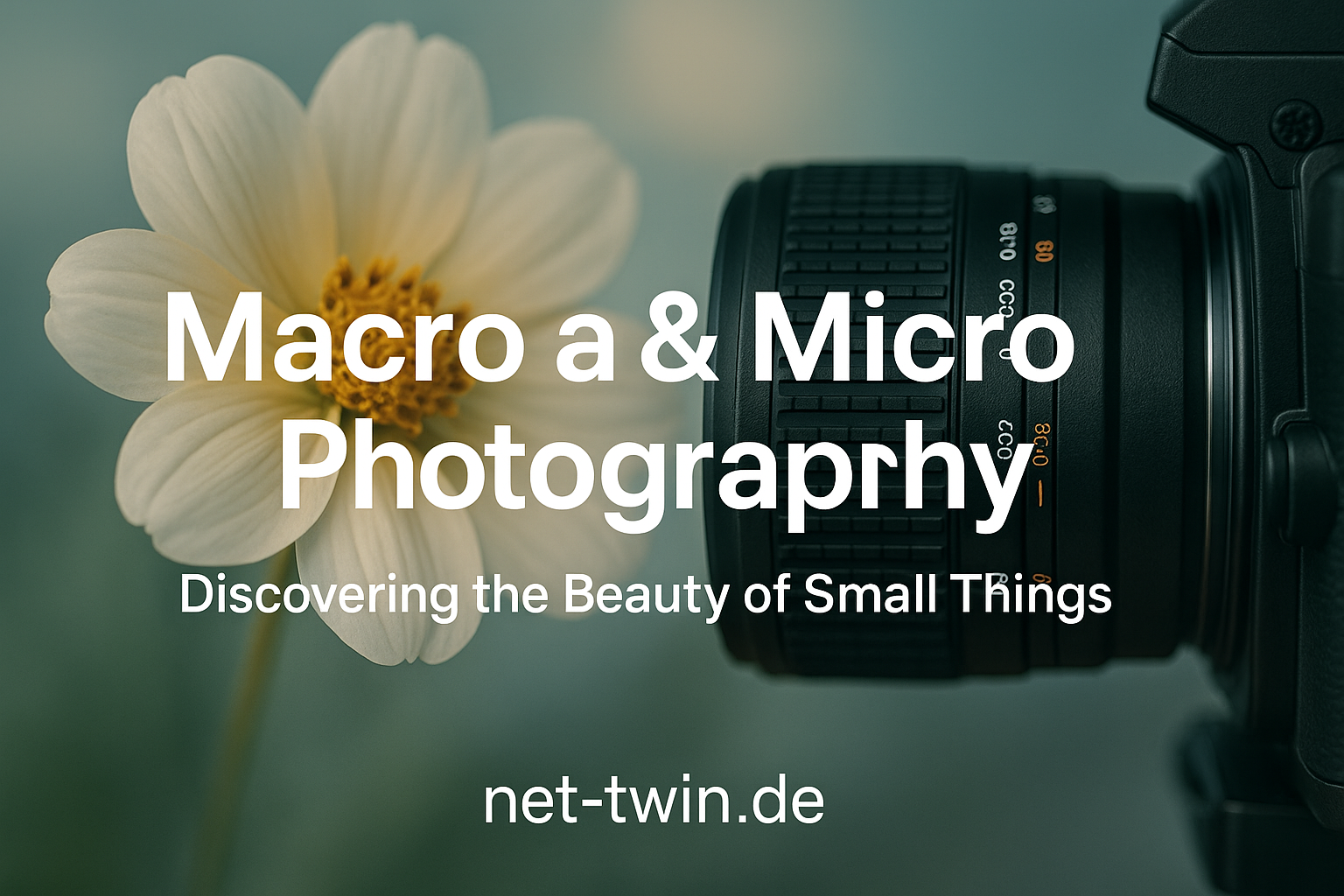
  • Title: Macro & Micro Photography – Discovering the Beauty of Small Things

    There’s an entire universe just below the threshold of the naked eye – textures, patterns, creatures, and structures most people overlook. Macro and micro photography bring this world into focus, one detail at a time.


    Here’s how you can start exploring it with your lens:


    1. Know the difference.

    Macro photography deals with small subjects at close range – like insects, textures, or plants – usually at a 1:1 magnification or higher.

    Micro photography (or photomicrography) involves microscopes to photograph what’s otherwise invisible – like crystals, cells, or microfibers.


    2. Start with what you have.
    Many smartphones today offer decent macro modes. Clip-on macro lenses are inexpensive and can produce surprising results. For DSLRs or mirrorless cameras, a dedicated macro lens (like a 100mm f/2.8) is ideal.


    3. Stabilization is key.
    At this scale, even the tiniest movement ruins the shot. Use a tripod, remote shutter, and delay timer. For extreme close-ups, consider a focusing rail for precision.


    4. Light your subject well.
    Natural light can work, but artificial light gives you control. Use LED rings, soft diffused light, or even a flashlight with a diffuser. Avoid harsh shadows and reflections.


    5. Mind your depth of field.
    At macro scale, depth of field is razor thin. Shoot at f/8–f/16, and use focus stacking (multiple shots with different focus points) to get your entire subject sharp.


    6. Subject ideas to start with:

    Textures: leaves, fabrics, wood grain

    Water droplets

    Bugs and insects (if they stay still!)

    Everyday objects like salt, match heads, coins

    Crystals, sand, spices, feathers


    7. Edit with care.
    Sharpening, contrast, and color adjustments can enhance details – but don’t overdo it. Highlight the natural beauty of the micro world.


    Pro Tip: Upload your discoveries to net-twin.de
    – whether it’s a bug’s eye or a dew-covered thread, your lens reveals what others miss.


    #MacroPhotography #MicroWorlds #CloseUpMagic #CreativeVision #TinyDetails #nettwin


    Kind regards, Andy


    -----------------------------------
    Advertising that's really worth it for you!

    Get it now: Get a €100 voucher from Temu (new customers only)!

    Step 1 - Use my voucher link: https://temu.to/m/uwsjqkbzhhl
    Step 2 - Enter the following code in the search field at Temu to secure your €100!
    The Code: tar37925
    Title: Macro & Micro Photography – Discovering the Beauty of Small Things There’s an entire universe just below the threshold of the naked eye – textures, patterns, creatures, and structures most people overlook. Macro and micro photography bring this world into focus, one detail at a time. Here’s how you can start exploring it with your lens: 1. Know the difference. Macro photography deals with small subjects at close range – like insects, textures, or plants – usually at a 1:1 magnification or higher. Micro photography (or photomicrography) involves microscopes to photograph what’s otherwise invisible – like crystals, cells, or microfibers. 2. Start with what you have. Many smartphones today offer decent macro modes. Clip-on macro lenses are inexpensive and can produce surprising results. For DSLRs or mirrorless cameras, a dedicated macro lens (like a 100mm f/2.8) is ideal. 3. Stabilization is key. At this scale, even the tiniest movement ruins the shot. Use a tripod, remote shutter, and delay timer. For extreme close-ups, consider a focusing rail for precision. 4. Light your subject well. Natural light can work, but artificial light gives you control. Use LED rings, soft diffused light, or even a flashlight with a diffuser. Avoid harsh shadows and reflections. 5. Mind your depth of field. At macro scale, depth of field is razor thin. Shoot at f/8–f/16, and use focus stacking (multiple shots with different focus points) to get your entire subject sharp. 6. Subject ideas to start with: Textures: leaves, fabrics, wood grain Water droplets Bugs and insects (if they stay still!) Everyday objects like salt, match heads, coins Crystals, sand, spices, feathers 7. Edit with care. Sharpening, contrast, and color adjustments can enhance details – but don’t overdo it. Highlight the natural beauty of the micro world. 🎯 Pro Tip: Upload your discoveries to net-twin.de – whether it’s a bug’s eye or a dew-covered thread, your lens reveals what others miss. 📌 #MacroPhotography #MicroWorlds #CloseUpMagic #CreativeVision #TinyDetails #nettwin Kind regards, Andy 🤩 ----------------------------------- Advertising that's really worth it for you! Get it now: Get a €100 voucher from Temu (new customers only)! Step 1 - Use my voucher link: https://temu.to/m/uwsjqkbzhhl Step 2 - Enter the following code in the search field at Temu to secure your €100! The Code: tar37925
    Love
    1
    0 Commentarios 0 Acciones 4K Views 0 Vista previa
  • Title: Graphic Design for Beginners – Make Ideas Look Brilliant

    Graphic design isn’t just decoration – it’s communication. Whether you're designing a poster, logo, website banner or album cover, design helps ideas shine. Getting started is easier than you think – you just need an eye for clarity and a few basic principles.


    Here’s your first creative toolkit:

    1. Understand visual hierarchy.
    Design isn’t just what you show, but how. Use font size, color, spacing, and alignment to guide the viewer’s eye. Big title, medium subhead, small body text – that’s your foundation.


    2. Pick a simple color palette.
    Use no more than 2–3 main colors. Use contrast wisely: dark vs. light, warm vs. cool. Try palette generators like Coolors.co for inspiration.


    3. Fonts matter more than you think.
    Choose readable fonts that match your message. Pair a strong header font (like Bebas Neue or Playfair Display) with a simple body font (like Lato or Roboto). Avoid using more than two fonts per design.


    4. Use grids and alignment.
    Good layout = invisible structure. Align your elements, keep spacing even, and avoid clutter. White space is your friend – it gives your content room to breathe.


    5. Less is (almost) always more.
    Remove anything that doesn’t add value. Ask: Does this element serve a purpose? Clean, minimal designs are more effective than noisy, overloaded ones.


    6. Learn by copying (for now).
    Recreate posters or ads you love just for practice. Don’t publish them, but reverse-engineering is one of the fastest ways to learn what works.


    7. Use free tools to get started.
    Try Canva, Figma, or Photopea. You’ll find templates, stock assets, and easy-to-use interfaces – perfect for learning layout, branding, and content creation.


    Pro Tip: Share your layouts and WIPs on net-twin.de – other creatives can offer tips on color, type, or flow. Feedback is the secret weapon of every designer.

    #GraphicDesign #BeginnerDesigners #DesignTips #VisualStorytelling #CreativeSkills #nettwin


    Kind regards, Andy


    -----------------------------------
    Advertising that's really worth it for you!

    Get it now: Get a €100 voucher from Temu (new customers only)!

    Step 1 - Use my voucher link: https://temu.to/m/uwsjqkbzhhl
    Step 2 - Enter the following code in the search field at Temu to secure your €100!
    The Code: tar37925

    Title: Graphic Design for Beginners – Make Ideas Look Brilliant Graphic design isn’t just decoration – it’s communication. Whether you're designing a poster, logo, website banner or album cover, design helps ideas shine. Getting started is easier than you think – you just need an eye for clarity and a few basic principles. Here’s your first creative toolkit: 1. Understand visual hierarchy. Design isn’t just what you show, but how. Use font size, color, spacing, and alignment to guide the viewer’s eye. Big title, medium subhead, small body text – that’s your foundation. 2. Pick a simple color palette. Use no more than 2–3 main colors. Use contrast wisely: dark vs. light, warm vs. cool. Try palette generators like Coolors.co for inspiration. 3. Fonts matter more than you think. Choose readable fonts that match your message. Pair a strong header font (like Bebas Neue or Playfair Display) with a simple body font (like Lato or Roboto). Avoid using more than two fonts per design. 4. Use grids and alignment. Good layout = invisible structure. Align your elements, keep spacing even, and avoid clutter. White space is your friend – it gives your content room to breathe. 5. Less is (almost) always more. Remove anything that doesn’t add value. Ask: Does this element serve a purpose? Clean, minimal designs are more effective than noisy, overloaded ones. 6. Learn by copying (for now). Recreate posters or ads you love just for practice. Don’t publish them, but reverse-engineering is one of the fastest ways to learn what works. 7. Use free tools to get started. Try Canva, Figma, or Photopea. You’ll find templates, stock assets, and easy-to-use interfaces – perfect for learning layout, branding, and content creation. 🎯 Pro Tip: Share your layouts and WIPs on net-twin.de – other creatives can offer tips on color, type, or flow. Feedback is the secret weapon of every designer. 📌 #GraphicDesign #BeginnerDesigners #DesignTips #VisualStorytelling #CreativeSkills #nettwin Kind regards, Andy 🤩 ----------------------------------- Advertising that's really worth it for you! 💰Get it now: Get a €100 voucher from Temu (new customers only)! Step 1 - Use my voucher link: https://temu.to/m/uwsjqkbzhhl Step 2 - Enter the following code in the search field at Temu to secure your €100! The Code: tar37925
    Like
    Wow
    2
    0 Commentarios 0 Acciones 6K Views 0 Vista previa
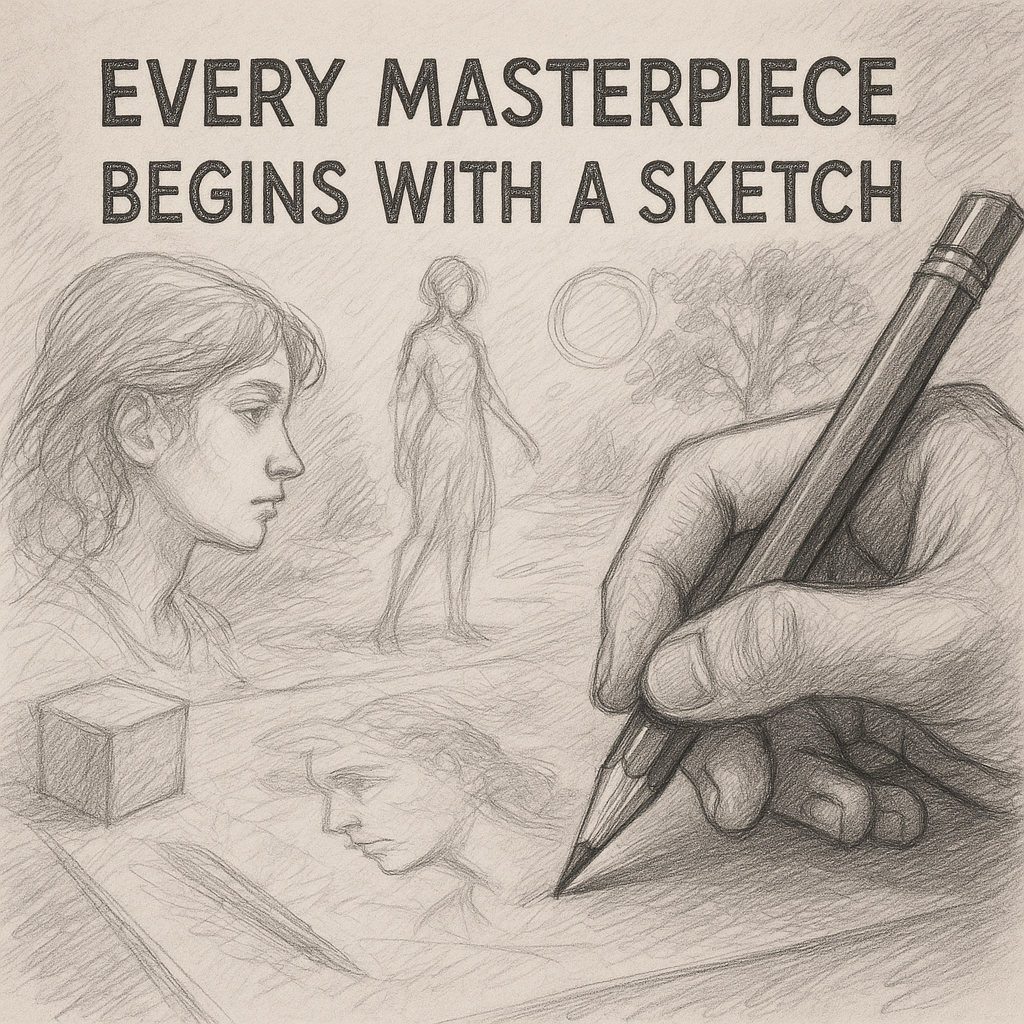
  • Title: Sketching for Creatives – Build Ideas with Pencil and Paper

    Sketching isn’t just drawing. It’s thinking visually. It’s planning, experimenting, and feeling your way into a creative idea. Whether you dream of digital painting, comics, design, or just want to relax – sketching sharpens your skills and imagination.


    Here’s a deeper guide to getting started:

    1. Get comfortable with imperfection.
    Sketching is not about making perfect art. It’s raw, quick, and sometimes messy. That’s its charm. Don’t erase every line – learn to embrace construction lines and looseness.


    2. Choose the right tools.
    A basic HB or 2B pencil and a sketchbook with decent paper are enough. Add a kneaded eraser and a fineliner later, but don’t overthink your materials.


    3. Warm-up before you draw.
    Like musicians, artists benefit from warm-ups. Fill a page with circles, lines, or shapes. This gets your hand used to motion and builds control.


    4. Master gesture drawing.
    Gesture sketches capture movement and flow in under 30 seconds. They train you to see the action, not the detail. Use real-life people, photos, or animals as references.


    5. Study form and perspective.
    Learn to break down complex objects into simple 3D shapes: cubes, spheres, cones. This will help you draw from imagination later on. Perspective (1-point, 2-point) is a game-changer for environments and depth.


    6. Build a daily habit.
    Even 10 minutes a day makes a huge difference. Draw your coffee mug. Sketch people on the train. Keep it light and enjoyable. Improvement comes through consistency, not pressure.


    7. Capture ideas on the go.
    Your sketchbook is also your idea vault. Jot down concepts, weird creatures, sword hilts, fantasy armor – whatever pops into your head. No censorship, no perfectionism.


    Pro Tip: Share your sketches on net-twin.de – feedback from fellow creatives can give you new eyes for your own work.

    And don’t forget: Every epic artwork once looked like a weird little doodle!

    Kind regards, Andy
    Title: Sketching for Creatives – Build Ideas with Pencil and Paper Sketching isn’t just drawing. It’s thinking visually. It’s planning, experimenting, and feeling your way into a creative idea. Whether you dream of digital painting, comics, design, or just want to relax – sketching sharpens your skills and imagination. Here’s a deeper guide to getting started: 1. Get comfortable with imperfection. Sketching is not about making perfect art. It’s raw, quick, and sometimes messy. That’s its charm. Don’t erase every line – learn to embrace construction lines and looseness. 2. Choose the right tools. A basic HB or 2B pencil and a sketchbook with decent paper are enough. Add a kneaded eraser and a fineliner later, but don’t overthink your materials. 3. Warm-up before you draw. Like musicians, artists benefit from warm-ups. Fill a page with circles, lines, or shapes. This gets your hand used to motion and builds control. 4. Master gesture drawing. Gesture sketches capture movement and flow in under 30 seconds. They train you to see the action, not the detail. Use real-life people, photos, or animals as references. 5. Study form and perspective. Learn to break down complex objects into simple 3D shapes: cubes, spheres, cones. This will help you draw from imagination later on. Perspective (1-point, 2-point) is a game-changer for environments and depth. 6. Build a daily habit. Even 10 minutes a day makes a huge difference. Draw your coffee mug. Sketch people on the train. Keep it light and enjoyable. Improvement comes through consistency, not pressure. 7. Capture ideas on the go. Your sketchbook is also your idea vault. Jot down concepts, weird creatures, sword hilts, fantasy armor – whatever pops into your head. No censorship, no perfectionism. 🎯 Pro Tip: Share your sketches on net-twin.de – feedback from fellow creatives can give you new eyes for your own work. And don’t forget: Every epic artwork once looked like a weird little doodle! Kind regards, Andy 🤩
    Love
    Wow
    2
    0 Commentarios 0 Acciones 3K Views 0 Vista previa
  • Quick Tutorial: How to Create Your Own DIY Stamps for Crafting

    Looking for a simple but satisfying project to boost your creativity? Making your own custom stamps is not only fun — it adds a personal touch to your journals, packaging, greeting cards, and art projects!


    Here’s a quick guide to get you started:

    What You’ll Need:

    Soft carving block or eraser

    Pencil & paper

    Linoleum carving tool or X-Acto knife

    Ink pad

    Optional: wood block for mounting


    Step-by-Step Guide:

    Sketch Your Design
    Start by drawing your idea on paper. Keep it simple — bold lines and clear shapes work best.

    Transfer the Design
    Rub the back of your drawing with pencil, place it face-down on the carving block, and trace over it to transfer.

    Carve It Out
    Carefully carve around your lines. Remove the negative space — everything you don't want to be inked.

    Test It!
    Press the stamp into an ink pad and stamp it on scrap paper. Make adjustments if needed.

    Optional: Mount It
    Glue your finished stamp onto a wooden block for better handling.


    Creative Ideas:

    Make a custom signature stamp

    Create botanical or nature patterns

    Design your own emojis or symbols

    Use them to personalize gift wrap or fabric


    Let your imagination lead the way — and don't forget to share your stamp creations with the community!

    #DIY #StampMaking #CreativeHobbies #Tutorial #Makers


    Have a nice day, Andy
    🎨 Quick Tutorial: How to Create Your Own DIY Stamps for Crafting 🖋️ Looking for a simple but satisfying project to boost your creativity? Making your own custom stamps is not only fun — it adds a personal touch to your journals, packaging, greeting cards, and art projects! Here’s a quick guide to get you started: 🧰 What You’ll Need: Soft carving block or eraser Pencil & paper Linoleum carving tool or X-Acto knife Ink pad Optional: wood block for mounting ✍️ Step-by-Step Guide: Sketch Your Design Start by drawing your idea on paper. Keep it simple — bold lines and clear shapes work best. Transfer the Design Rub the back of your drawing with pencil, place it face-down on the carving block, and trace over it to transfer. Carve It Out Carefully carve around your lines. Remove the negative space — everything you don't want to be inked. Test It! Press the stamp into an ink pad and stamp it on scrap paper. Make adjustments if needed. Optional: Mount It Glue your finished stamp onto a wooden block for better handling. ✨ Creative Ideas: Make a custom signature stamp Create botanical or nature patterns Design your own emojis or symbols Use them to personalize gift wrap or fabric Let your imagination lead the way — and don't forget to share your stamp creations with the community! 🧡 #DIY #StampMaking #CreativeHobbies #Tutorial #Makers Have a nice day, Andy 🤩
    Wow
    1
    0 Commentarios 0 Acciones 3K Views 0 Vista previa
  • How to Write Better AI Image Prompts – A Quick Guide for Beginners

    Want to create stunning AI-generated images, but not sure how to describe what you have in mind? Here’s a simple guide to help you craft better prompts – and get results that actually match your vision.

    1. Be Specific, Not Vague
    Bad prompt: "A dragon"
    Better prompt: "A fierce red dragon flying over a burning medieval village at night, detailed scales, cinematic lighting"

    Use adjectives (color, mood, style), verbs (what’s happening?), and context (where/when?).

    2. Use Simple, Natural Language
    You don’t need fancy terms. Just write like you’re explaining the image to a friend.
    Example: "A cozy cabin in a snowy forest, smoke rising from the chimney, warm light glowing through the windows"

    3. Add Art Style or Medium
    Want a painting? A photo? A sketch? Say it!
    Examples:

    "In the style of a vintage oil painting"

    "Black and white pencil sketch of a wolf"

    "Photo-realistic portrait with soft lighting"

    4. Include Composition Tips
    Want a close-up? A wide shot? Add that!
    Examples:

    "Top-down view of a Japanese garden"

    "Portrait, centered, soft depth of field"

    5. Use Negative Prompts (if possible)
    Some AI tools let you tell it what to avoid.
    Example:

    "A knight in armor, realistic –– no text, no watermark, no blurriness"

    Pro Tip: Try tools like Lexica, PromptHero, or Krea.ai to explore other people’s prompts and see how they shape the final image.

    Summary – Prompt Formula:
    [Subject] + [Action or Situation] + [Style/Medium] + [Lighting/Composition] + [Optional: What to avoid]

    Example:
    "A lonely lighthouse on a rocky shore during a storm, waves crashing, dramatic lighting, cinematic photo style"

    Have fun exploring your creativity! Got prompt ideas or cool images? Share them with the community on net-twin.de!
    Let’s inspire each other.
    🎨 How to Write Better AI Image Prompts – A Quick Guide for Beginners Want to create stunning AI-generated images, but not sure how to describe what you have in mind? Here’s a simple guide to help you craft better prompts – and get results that actually match your vision. 🔹 1. Be Specific, Not Vague Bad prompt: "A dragon" Better prompt: "A fierce red dragon flying over a burning medieval village at night, detailed scales, cinematic lighting" ✔️ Use adjectives (color, mood, style), verbs (what’s happening?), and context (where/when?). 🔹 2. Use Simple, Natural Language You don’t need fancy terms. Just write like you’re explaining the image to a friend. Example: "A cozy cabin in a snowy forest, smoke rising from the chimney, warm light glowing through the windows" 🔹 3. Add Art Style or Medium Want a painting? A photo? A sketch? Say it! Examples: "In the style of a vintage oil painting" "Black and white pencil sketch of a wolf" "Photo-realistic portrait with soft lighting" 🔹 4. Include Composition Tips Want a close-up? A wide shot? Add that! Examples: "Top-down view of a Japanese garden" "Portrait, centered, soft depth of field" 🔹 5. Use Negative Prompts (if possible) Some AI tools let you tell it what to avoid. Example: "A knight in armor, realistic –– no text, no watermark, no blurriness" 💡 Pro Tip: Try tools like Lexica, PromptHero, or Krea.ai to explore other people’s prompts and see how they shape the final image. 🎯 Summary – Prompt Formula: [Subject] + [Action or Situation] + [Style/Medium] + [Lighting/Composition] + [Optional: What to avoid] Example: "A lonely lighthouse on a rocky shore during a storm, waves crashing, dramatic lighting, cinematic photo style" Have fun exploring your creativity! Got prompt ideas or cool images? Share them with the community on net-twin.de! 🚀 Let’s inspire each other.
    Love
    1
    0 Commentarios 0 Acciones 2K Views 0 Vista previa
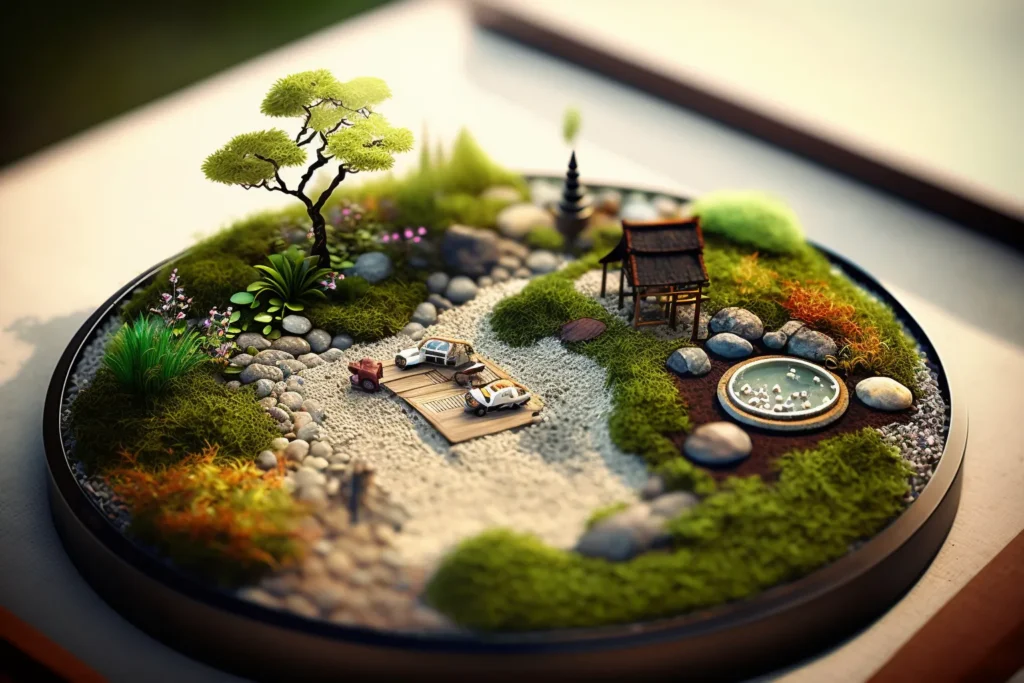
  • How to Create a Miniature Zen Garden for Relaxation

    Unleash your creativity and bring tranquility to your space with this simple, artistic project!

    Step 1: Gather Your Materials
    You’ll need:

    A shallow container (wooden, ceramic, or glass).
    Fine sand (white or colored).
    Small stones, pebbles, or crystals.
    Miniature rake (or make one with toothpicks and glue).
    Optional: small plants, figurines, or shells for decoration.


    Step 2: Prepare the Base

    Fill your container with fine sand to create a flat, even surface.
    Shake the container gently to level the sand or smooth it with your hand.


    Step 3: Arrange the Stones

    Place stones or pebbles in your sand to represent islands or mountains.
    Experiment with groupings to achieve balance and harmony.


    Step 4: Add Decorative Elements (Optional)

    Include small air plants, moss, or figurines like a Buddha or animal to personalize your garden.
    Ensure the design feels calming and uncluttered.


    Step 5: Create Patterns

    Use the miniature rake or a fork to draw patterns in the sand.
    Experiment with swirls, straight lines, or concentric circles around the stones.
    Smooth and redraw as often as you like—it’s part of the Zen process!


    Step 6: Find the Perfect Spot

    Place your Zen garden in a quiet area where you can interact with it.
    Use it to relax, focus, or find inspiration during your day.


    Why It’s Amazing:

    A miniature Zen garden is not only a creative project but also a meditative tool that helps you unwind and spark new ideas. Plus, it’s a beautiful addition to any desk or shelf!

    I hope you like my tutorial.
    Kind regards and have a nice day,

    Andy

    How to Create a Miniature Zen Garden for Relaxation Unleash your creativity and bring tranquility to your space with this simple, artistic project! Step 1: Gather Your Materials You’ll need: A shallow container (wooden, ceramic, or glass). Fine sand (white or colored). Small stones, pebbles, or crystals. Miniature rake (or make one with toothpicks and glue). Optional: small plants, figurines, or shells for decoration. Step 2: Prepare the Base Fill your container with fine sand to create a flat, even surface. Shake the container gently to level the sand or smooth it with your hand. Step 3: Arrange the Stones Place stones or pebbles in your sand to represent islands or mountains. Experiment with groupings to achieve balance and harmony. Step 4: Add Decorative Elements (Optional) Include small air plants, moss, or figurines like a Buddha or animal to personalize your garden. Ensure the design feels calming and uncluttered. Step 5: Create Patterns Use the miniature rake or a fork to draw patterns in the sand. Experiment with swirls, straight lines, or concentric circles around the stones. Smooth and redraw as often as you like—it’s part of the Zen process! Step 6: Find the Perfect Spot Place your Zen garden in a quiet area where you can interact with it. Use it to relax, focus, or find inspiration during your day. Why It’s Amazing: A miniature Zen garden is not only a creative project but also a meditative tool that helps you unwind and spark new ideas. Plus, it’s a beautiful addition to any desk or shelf! I hope you like my tutorial. Kind regards and have a nice day, Andy 😆
    Love
    1
    0 Commentarios 0 Acciones 4K Views 0 Vista previa
  • Introducing Net-Twin.de, a online community for creative individuals worldwide. Whether you're an #artist, #writer, #designer, or simply passionate about unleashing your creativity, our platform provides the perfect space for you to connect, collaborate, and showcase your work. Join a growing community of like-minded individuals, exchange ideas, gain inspiration, and nurture your talent.
    Introducing Net-Twin.de, a online community for creative individuals worldwide. Whether you're an #artist, #writer, #designer, or simply passionate about unleashing your creativity, our platform provides the perfect space for you to connect, collaborate, and showcase your work. Join a growing community of like-minded individuals, exchange ideas, gain inspiration, and nurture your talent. 🤩
    Love
    1
    0 Commentarios 0 Acciones 5K Views 0 Vista previa