


How to Review Your Assignment Like a Professional Editor
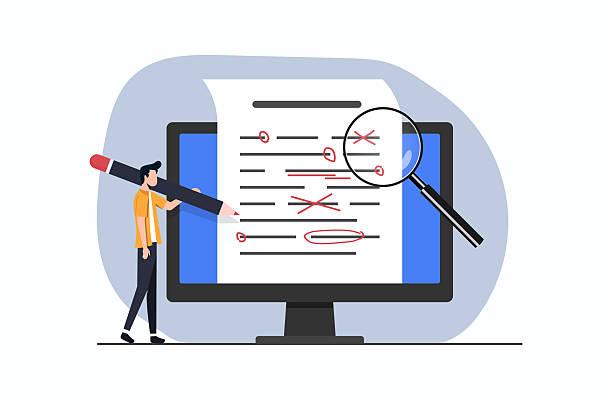
Reviewing an assignment is not just about spotting spelling mistakes. Professional editors approach a document with a strategic mindset, focusing on clarity, structure, argument strength, and academic accuracy. When students adopt the same mindset, the quality of their assignments improves significantly. A careful review can be the difference between an average grade and an excellent one.
This guide explains how to review your assignment like a professional editor, using proven techniques that enhance content quality, coherence, and presentation while meeting academic expectations.
Understand the Purpose Before You Review
Before making any edits, professional editors always revisit the purpose of the text. As a student, you should ask yourself what the assignment question is really asking and whether your work answers it clearly.
Read the assignment brief carefully and compare it with your content. Check if you have addressed all required components, including arguments, evidence, analysis, and conclusions. Reviewing without this step often leads to surface level corrections while deeper issues remain unresolved.
Align Your Work With Learning Outcomes
Assignments are assessed against learning outcomes, not just writing quality. Make sure each section of your work contributes directly to those outcomes. Remove content that sounds impressive but does not serve the purpose of the task.
Review Structure and Logical Flow developing a comprehensive business strategy for an organisation
Professional editors pay close attention to structure because strong ideas lose impact when presented poorly, especially in complex academic tasks such as developing a comprehensive business strategy for an organisation. Start by reviewing the overall organisation of your assignment to ensure ideas are presented in a clear and logical sequence.
Check that your introduction clearly outlines the topic, scope, and objectives. Each body paragraph should focus on one main idea, supported by relevant evidence and thoughtful analysis. Transitions between paragraphs should feel natural and logical rather than abrupt, helping the reader follow your argument smoothly.
Strengthen Paragraph Cohesion
Each paragraph should begin with a clear topic sentence that signals its purpose. Follow this with explanation, evidence, and critical discussion. End paragraphs by linking the idea back to the main argument, ensuring the reader understands its relevance.
Examine Argument Quality and Critical Thinking
One key difference between student work and professionally edited content is the depth of analysis. Editors look beyond what is written and consider how well ideas are supported and developed.
Review each claim and ask whether it is backed by credible academic sources. Avoid descriptive writing that only summarises information. Instead, focus on analysis by explaining why the information matters and how it supports your argument.
Balance Evidence and Interpretation
Using sources is important, but overloading your assignment with quotations can weaken originality. Aim for a balance where sources support your ideas rather than replace them. Paraphrase effectively and add your own interpretation to demonstrate critical thinking.
Check Language Clarity and Academic Tone
Professional editors prioritise clarity over complexity. Long sentences and advanced vocabulary do not automatically improve academic quality. In fact, they often confuse the reader.
Read your assignment aloud to identify awkward phrasing or unclear sentences. Simplify language where possible and remove unnecessary words. Ensure your tone remains formal and objective throughout the document.
Eliminate Common Language Issues
Watch for vague expressions, repetitive phrasing, and informal language. Replace conversational terms with precise academic alternatives. Consistency in terminology also helps maintain clarity and professionalism.
Review Grammar Punctuation and Style Consistency
While content quality matters most, technical accuracy cannot be ignored. Errors in grammar and punctuation distract the reader and reduce credibility.
Professional editors review documents multiple times, focusing on different aspects each time. Dedicate one round of review solely to grammar and punctuation. Check sentence structure, verb tense consistency, and subject verb agreement carefully.
Maintain Formatting and Referencing Accuracy
Ensure your formatting follows the required academic style, whether it is APA, Harvard, or another system. Review in text citations and reference lists for accuracy and consistency. Even small formatting mistakes can result in lost marks.
Assess Originality and Academic Integrity
A professional review always includes checking for originality. Ensure that all borrowed ideas are properly cited and that your work reflects your own understanding.
Paraphrased content should differ significantly from the original wording while retaining the intended meaning. Avoid patchwriting, which occurs when sentences are only slightly modified from the source.
Use Plagiarism Checks Wisely
Plagiarism detection tools can be helpful, but they should not replace careful manual review. Use them to identify problem areas, then revise thoughtfully rather than making superficial changes.
Take a Break and Review With Fresh Eyes
Editors know the value of distance. Reviewing immediately after writing makes it difficult to spot mistakes because your brain fills in gaps automatically.
Take a break of several hours or even a day before reviewing your assignment. When you return, read it as if you were the examiner encountering it for the first time. This approach helps you identify unclear arguments and logical gaps more effectively.
Seek Constructive Feedback When Possible
If time allows, ask a peer or mentor to review your work. Fresh perspectives often highlight issues you may have overlooked. Consider their feedback carefully and decide which suggestions strengthen your assignment.
Final Proofreading Before Submission
The final stage of professional editing is proofreading. This is not the time for major revisions but for catching minor errors and ensuring consistency.
Check headings, spacing, page numbers, and alignment. Confirm that figures, tables, and appendices are labelled correctly and referenced in the text. A polished presentation reflects attention to detail and professionalism.
Conclusion
Reviewing your assignment like a professional editor requires patience, strategy, and multiple focused reviews. By examining structure, argument strength, language clarity, and technical accuracy, you can significantly improve the quality of your academic work. This approach not only leads to better grades but also strengthens your overall academic writing skills. With practice, professional level reviewing becomes a habit that benefits every assignment you submit.
- Make-up and SFX
- Art & Design
- Comedy
- Crafts
- Fashion and Style
- Ausbildung
- Entertainment
- Movies and Animation
- E-Sport & Gaming
- Game Development & Modding
- Live Style
- Natural
- Blades & Guns
- Development & Coding
- Pets and Animals
- Get it 100% for free
- Science and Technology
- Music
- Travel and Events
- Shopping
- Sports
- Theater

 English
 French
 Spanish